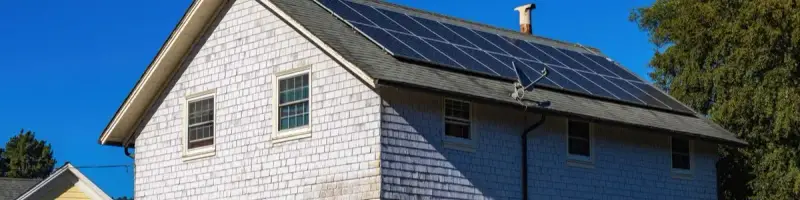
Torrance Roof Pros: Roof Replacement, Leak Repair & Low-Slope Systems
Expert residential and commercial roofing services. Every estimate includes a measured pitch reading for each plane on your roof.
- Licensed, insured and bonded California C-39 roofing contractor
- Measured pitch reading for every plane, written on the estimate
- Free roof inspection with photographs, moisture readings and a written report
- Written workmanship warranty on every roof system we install
Our Roofing Services in Torrance, CA
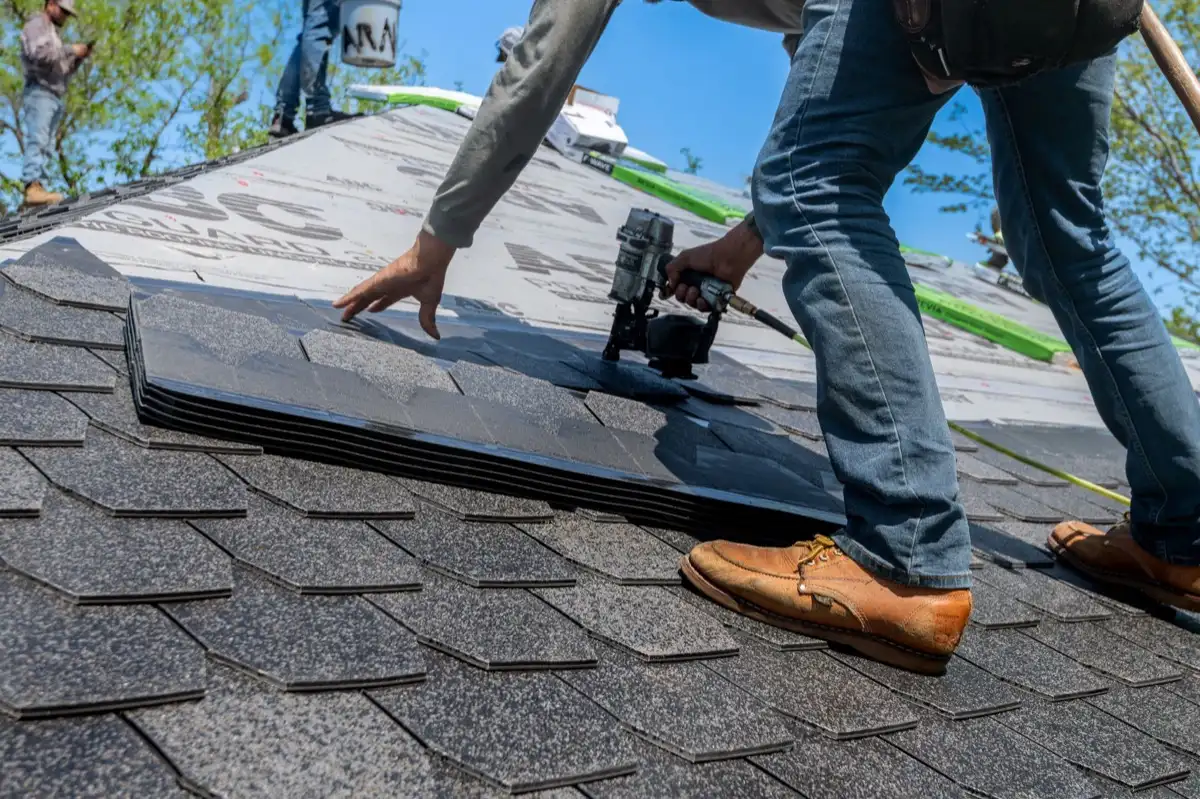
Roof Replacement
A replacement decision here should start with a pitch gauge, not a birth certificate. Age tells you the covering is tired.
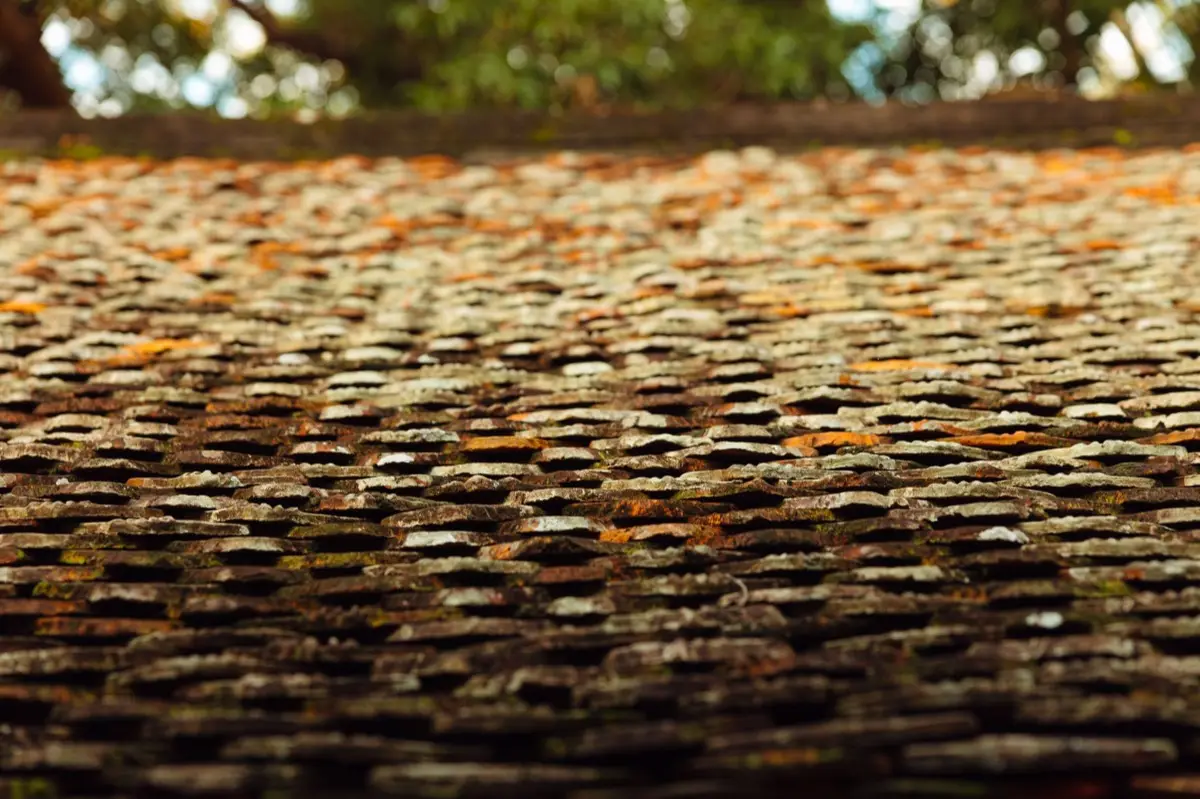
Roof Leak Repair
On a shallow plane water does not fall off the roof. It crawls, spreads sideways along the lap, and finds the deck seam rather than the shortest way down.
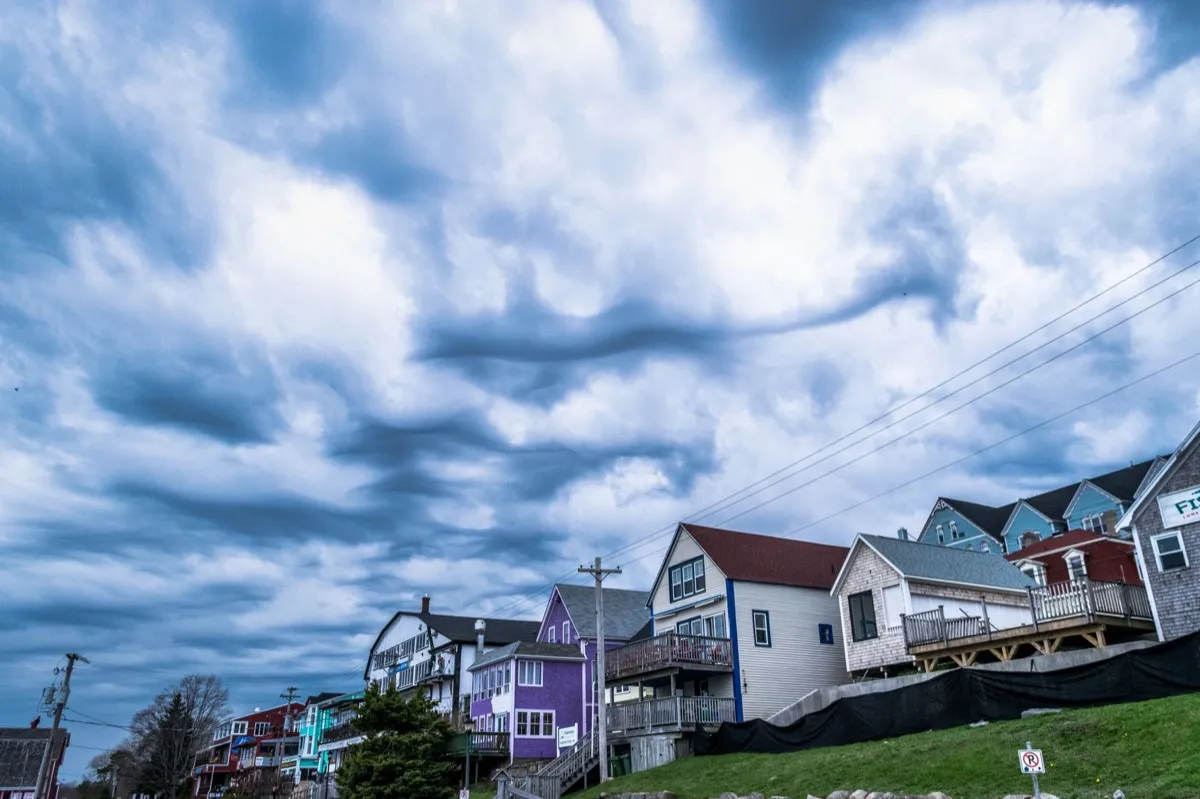
Storm Damage Roof Restoration
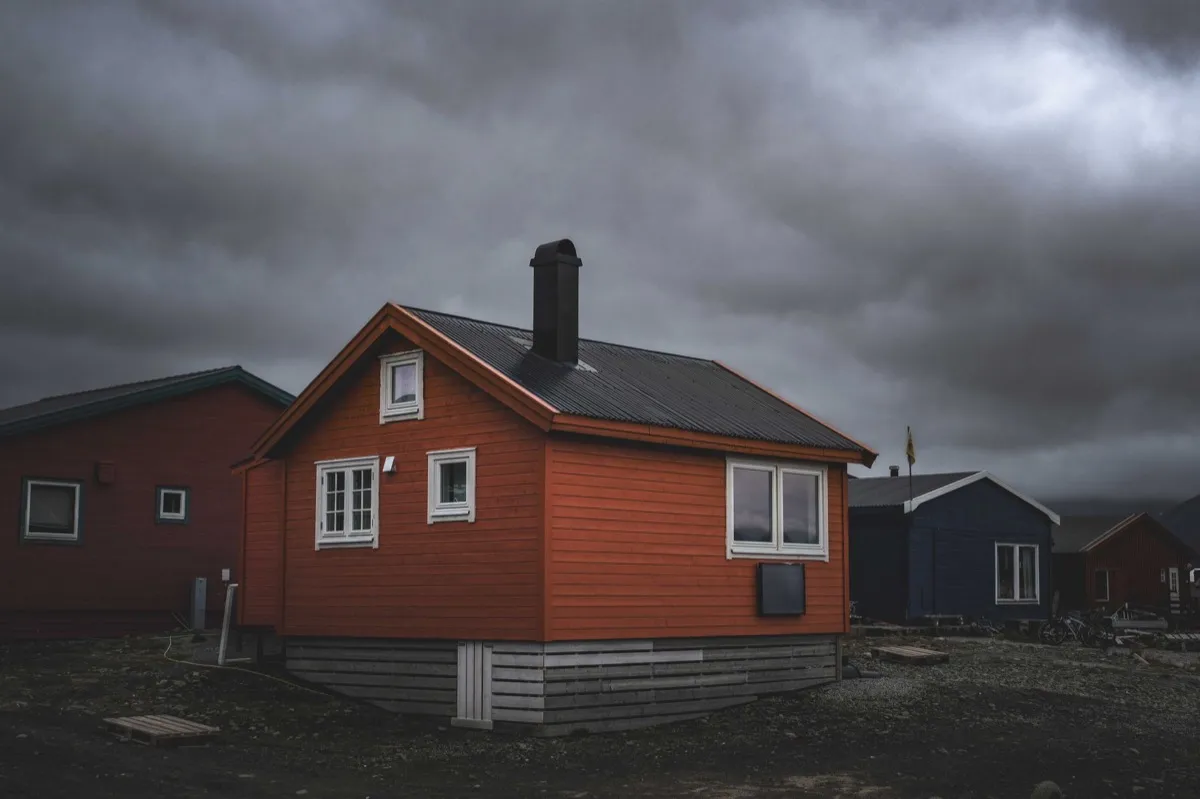
Storms here arrive as warm-sector rain riding an atmospheric river: two or three inches over a day, more than that on the Peninsula slopes, pushed sideways by a southerly wind. What that does to a roof is nothing like what a hailstorm does.
Hail Damage Roof Repair
This is the page where our answer is usually no, and we would rather you read that here than pay us to say it from a ladder. Coastal Los Angeles County sees hail rarely, and small when it does.
Wind Damage Roof Repair
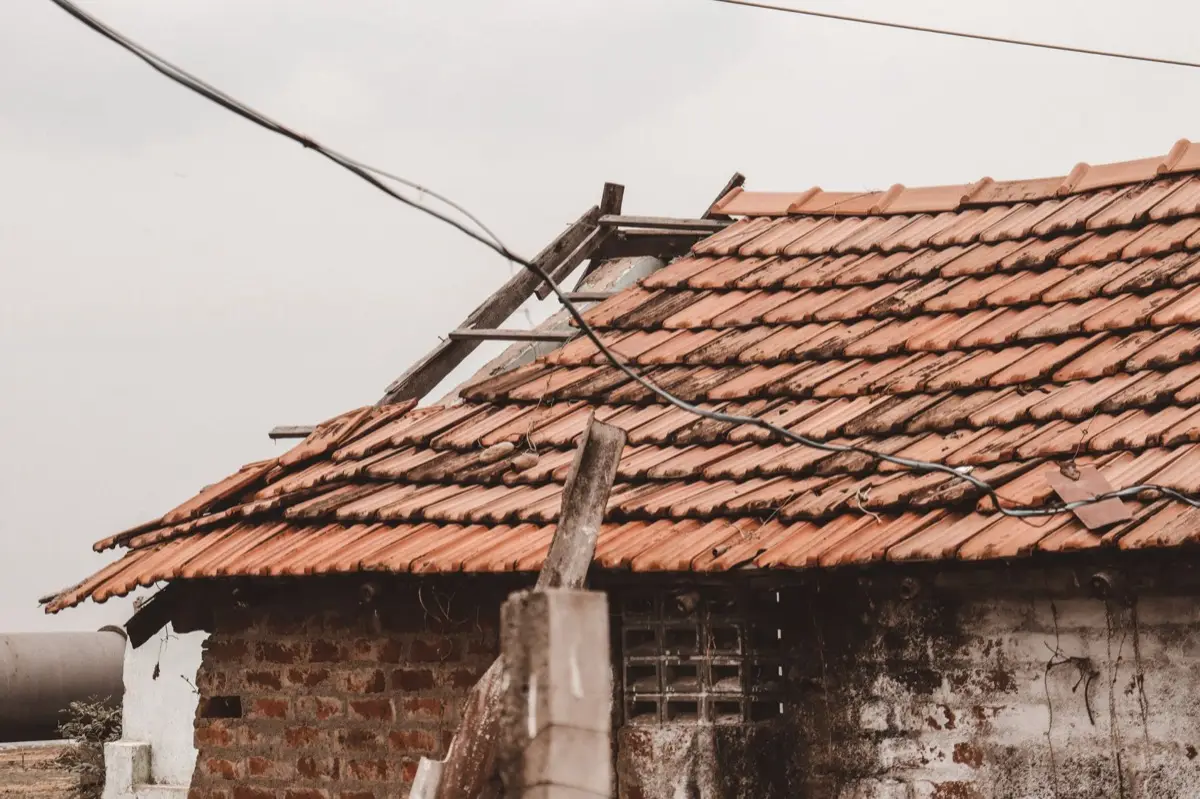
Wind takes shingles off shallow roofs first, and the reason is not the trim. It is that a nearly flat plane offers the wind a broad, low-angle surface to get underneath, while offering the shingle almost no help from gravity to stay where it was put.
Roof Inspections
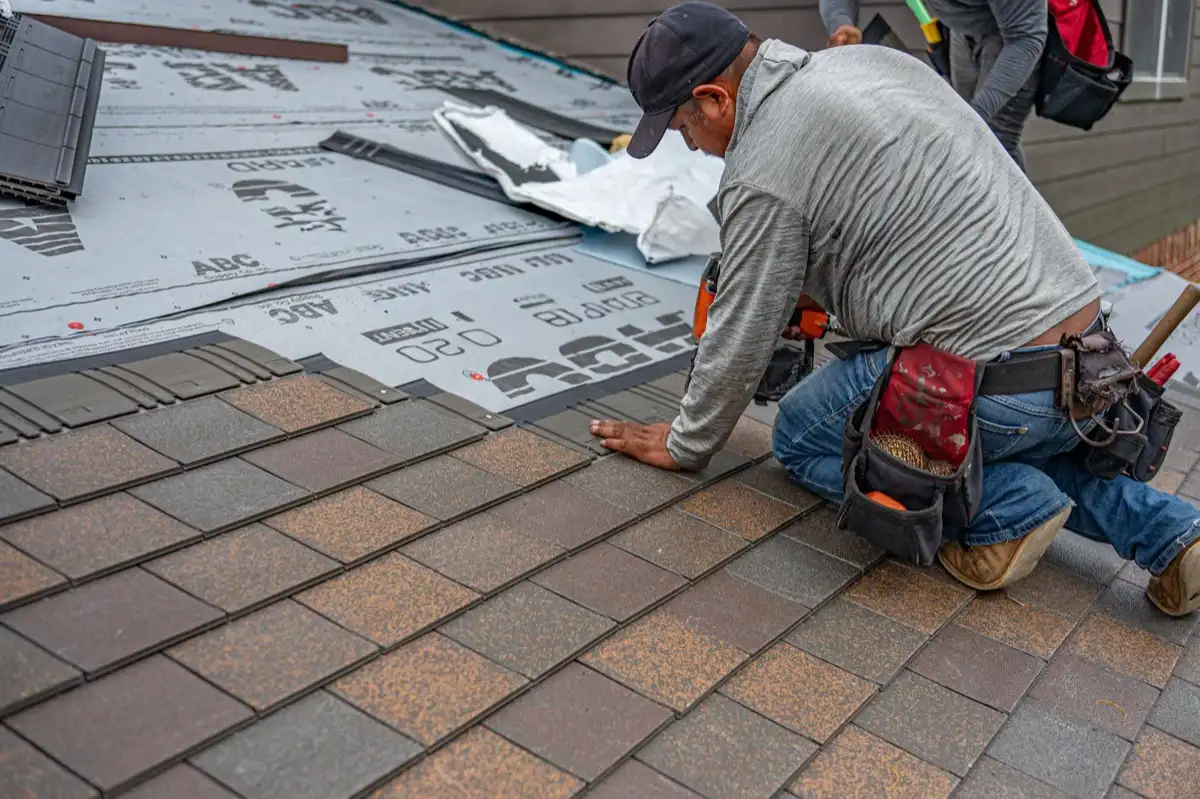
Our inspection begins with an inclinometer rather than a camera, because the number it gives changes how every other finding should be read. The same worn shingle means one thing at 6-in-12 and something considerably more urgent at 2-in-12.
Asphalt Shingle Roofing
Asphalt shingles are a water-shedding product, not a waterproof one. They work by moving water down a slope quickly enough that it never has time to sit on a lap.
Metal Roofing
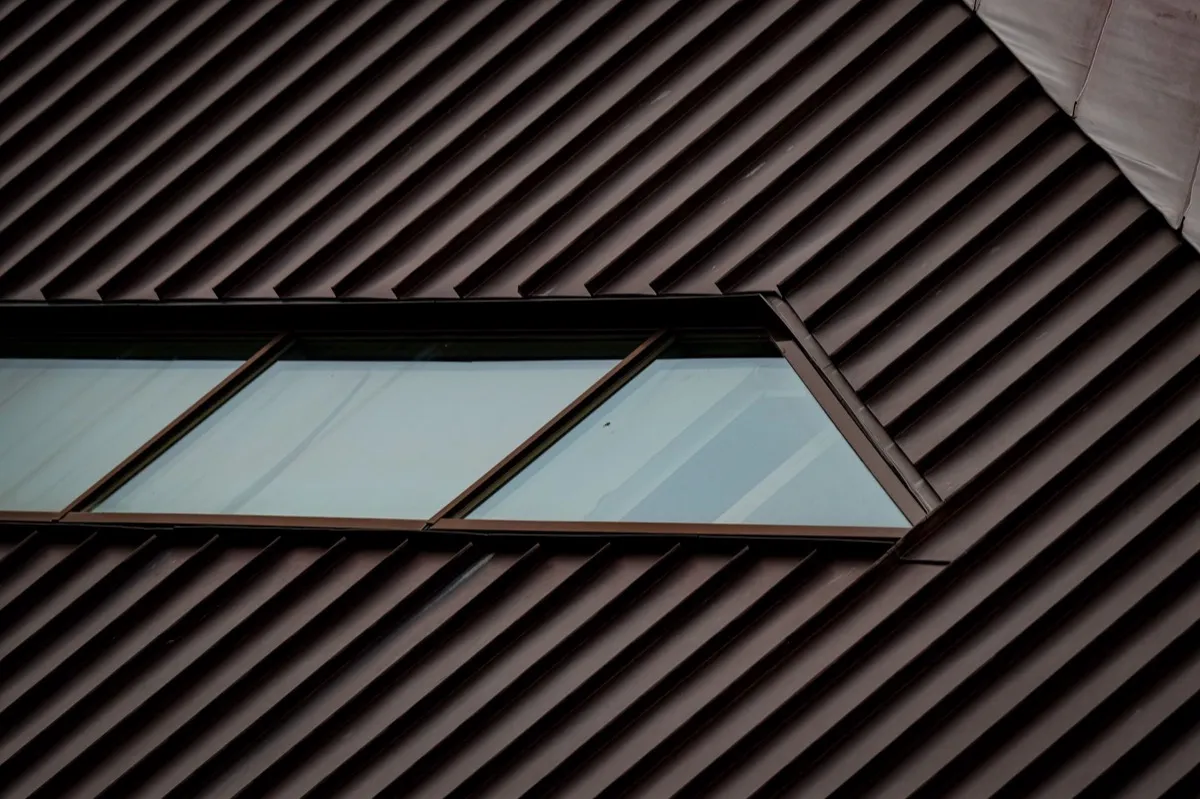
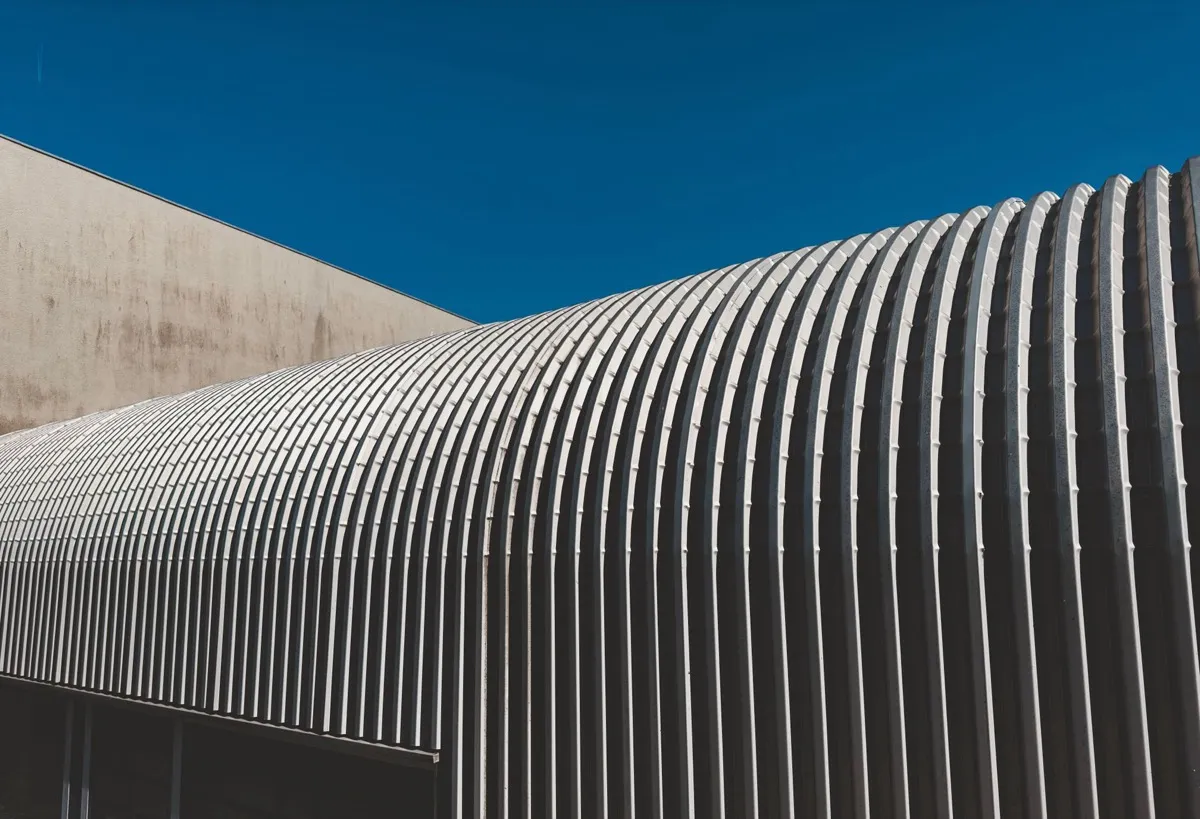
Metal is the honest answer to a specific local problem: the plane that is too shallow for shingles but too visible from the street for a single-ply membrane. There are a great many of those planes in this city, and most of them currently have shingles on them.
Tile Roofing
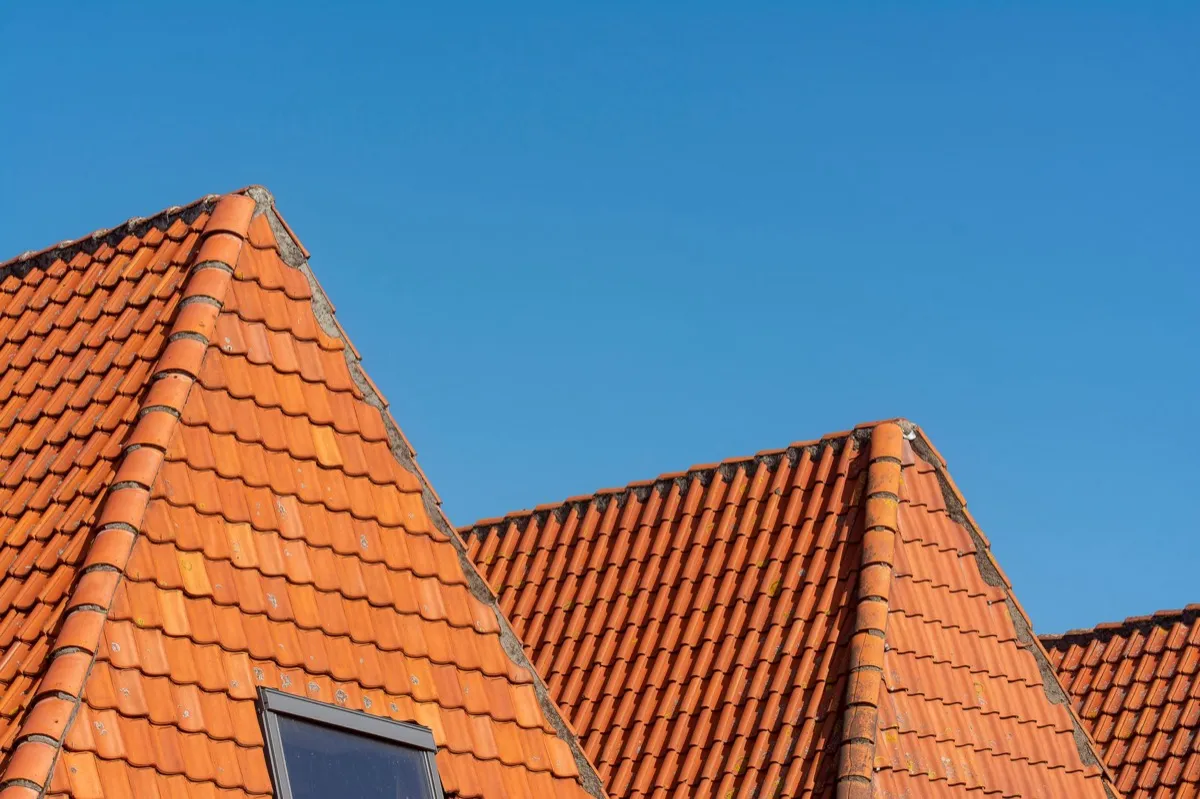
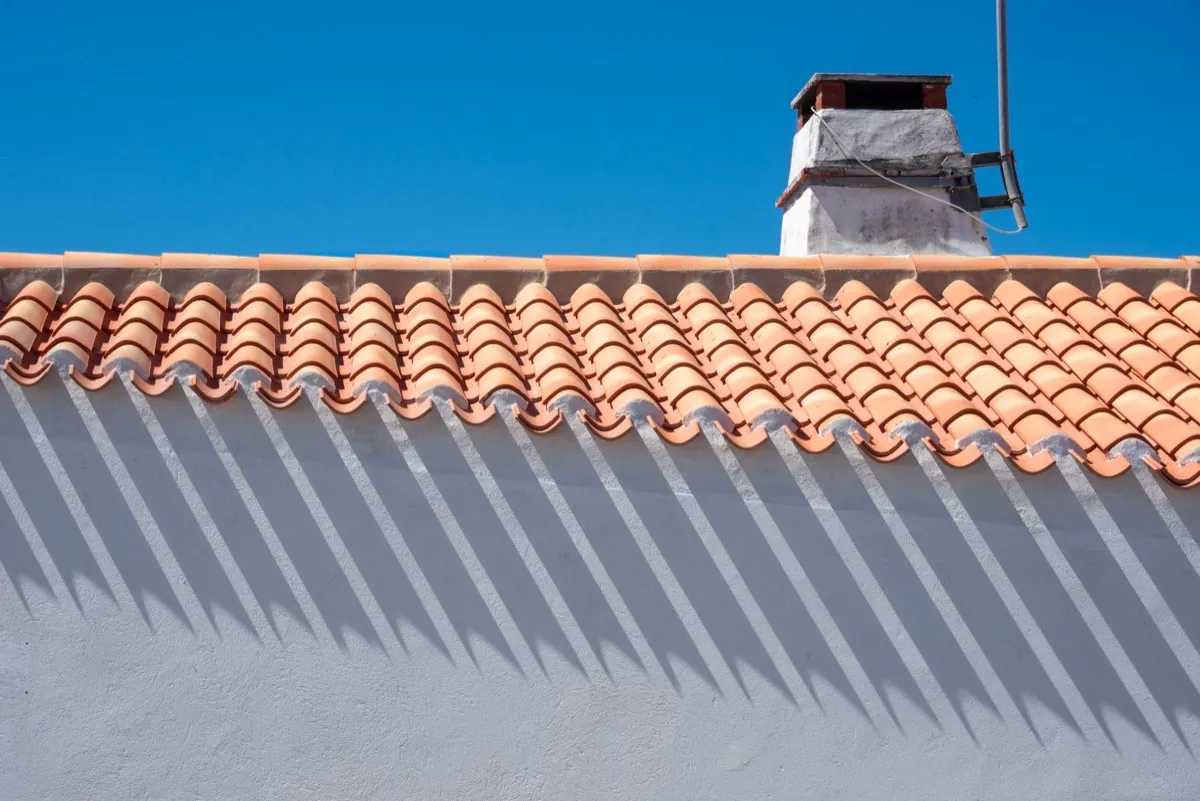
The tile is not your roof. The membrane under the tile is your roof, and the tile is a rain screen and a sunshade that keeps ultraviolet light off it.

Flat & Low-Slope Roofing
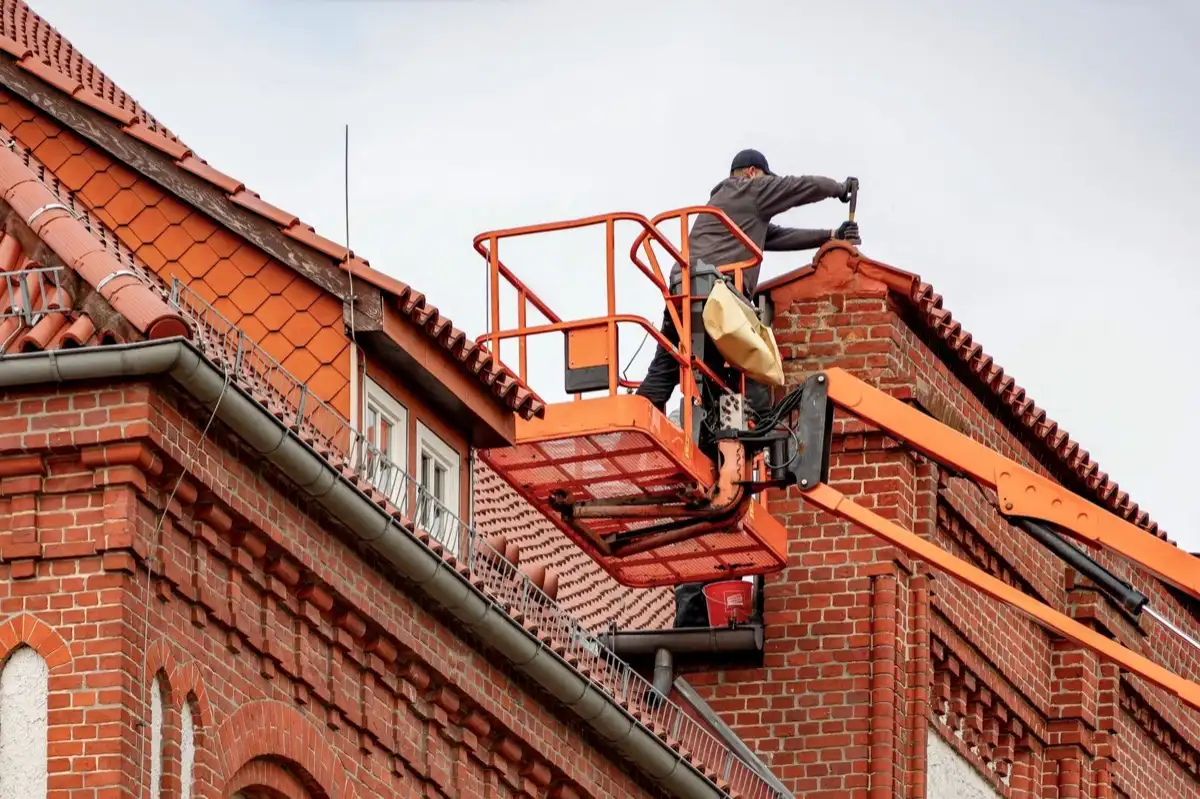
Nothing built to drain is truly flat. The design minimum is a quarter of an inch of fall per foot, and the reason so many rear additions, garages and carports in this city leak is that they were framed at half of that, or at nothing at all.
Roof Coatings & Sealing
A coating is maintenance, not a roof. Applied over a sound low-slope membrane with real fall, it will buy you eight to twelve years and drop the surface temperature noticeably.
Roof Ventilation
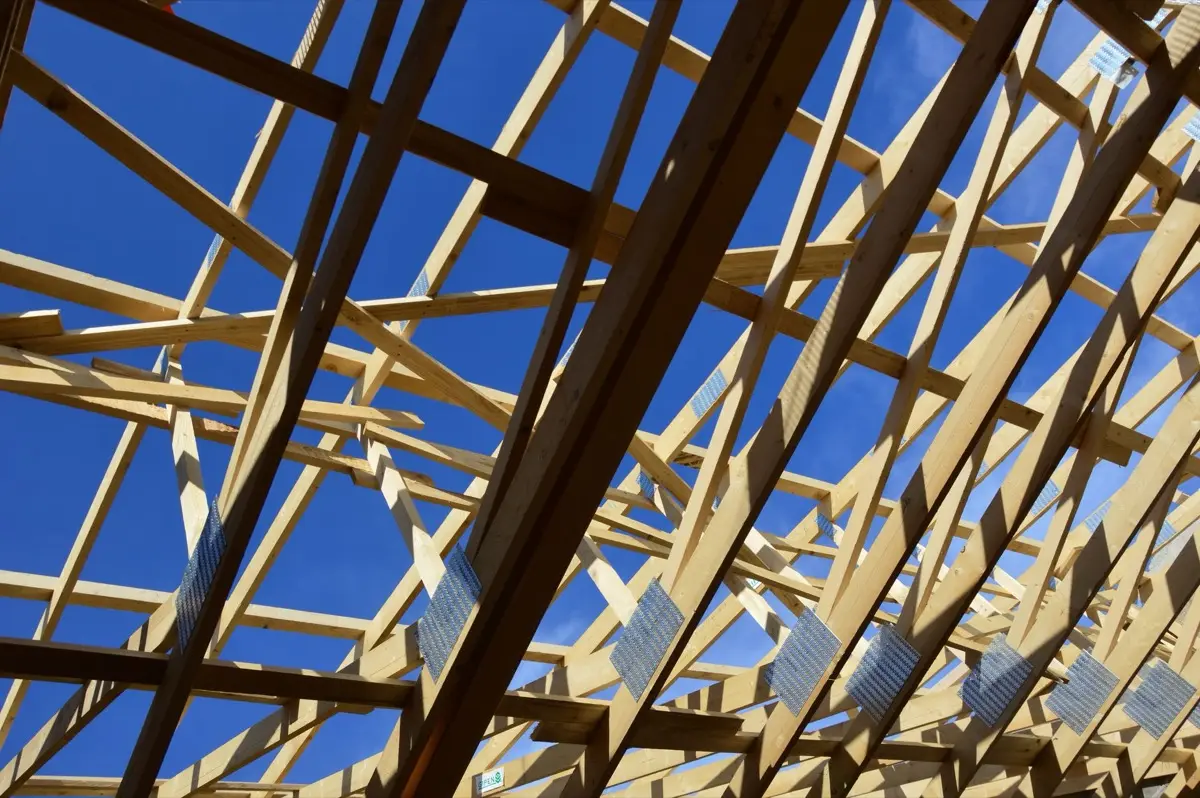
Ventilation advice written for steep roofs travels badly to this city. A ridge vent needs ridge, and a shallow plane has very little of it, along with an attic volume you can sometimes measure in inches once you crawl out toward the eave.
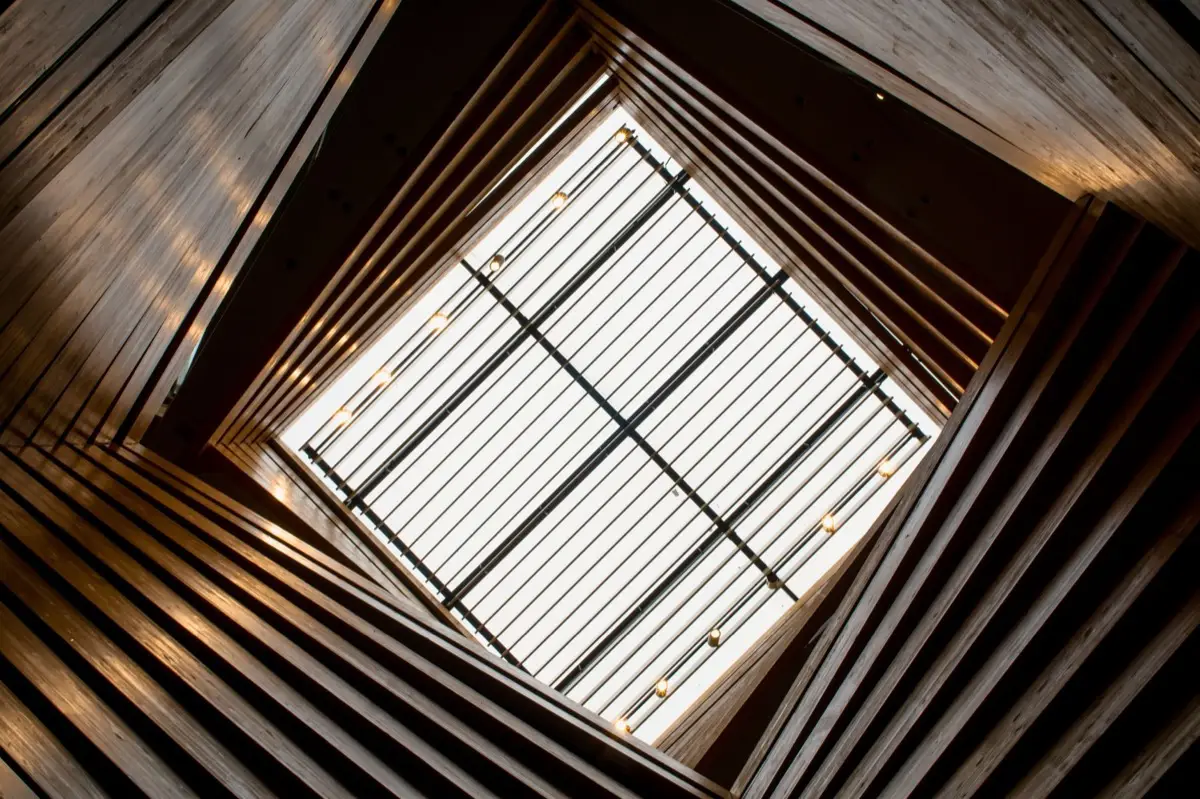
Skylights
On a low-slope roof a skylight is a dam. Water arriving slowly across a shallow plane meets a rectangular obstruction and stops there, which is why so many of these units leak on the up-slope side and almost never on the down-slope one.
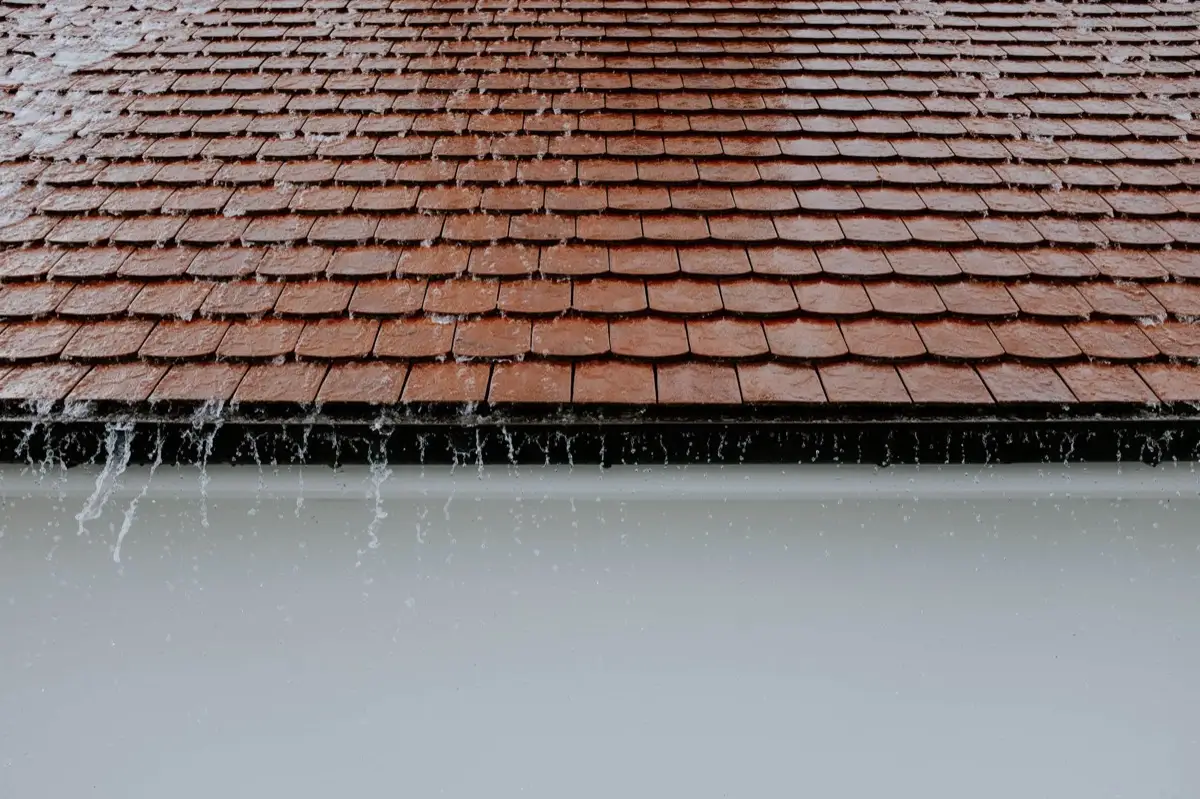
Gutters & Downspouts
Gutter sizing on a shallow roof is not the same problem as on a steep one. Water crossing a long, low plane arrives at the eave as a wide, slow sheet rather than a fast stream, so it clings and runs behind an undersized trough instead of dropping into it.
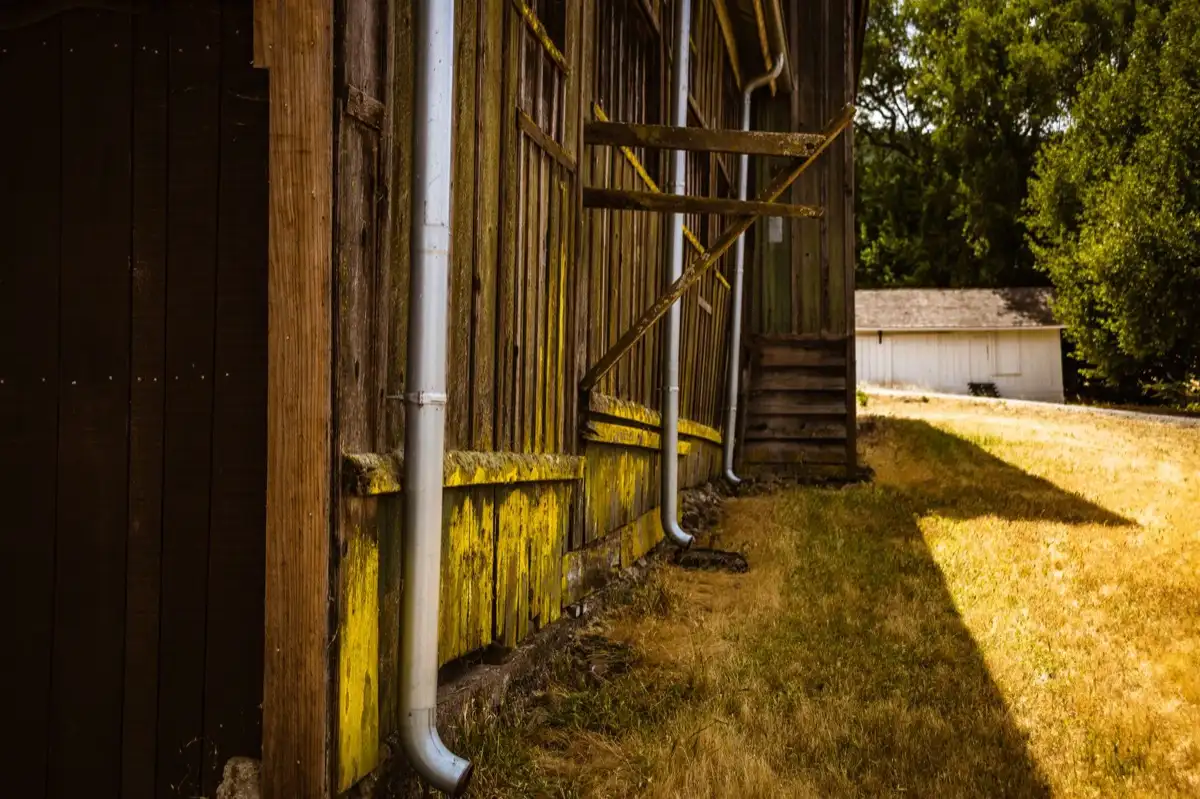
Fascia & Soffit
The eave is the wettest twelve inches of a shallow roof. Water that crossed a low plane slowly is still moving slowly when it reaches the edge, so it clings, wicks backward under the drip line and sits in the joint behind the gutter instead of launching clear.
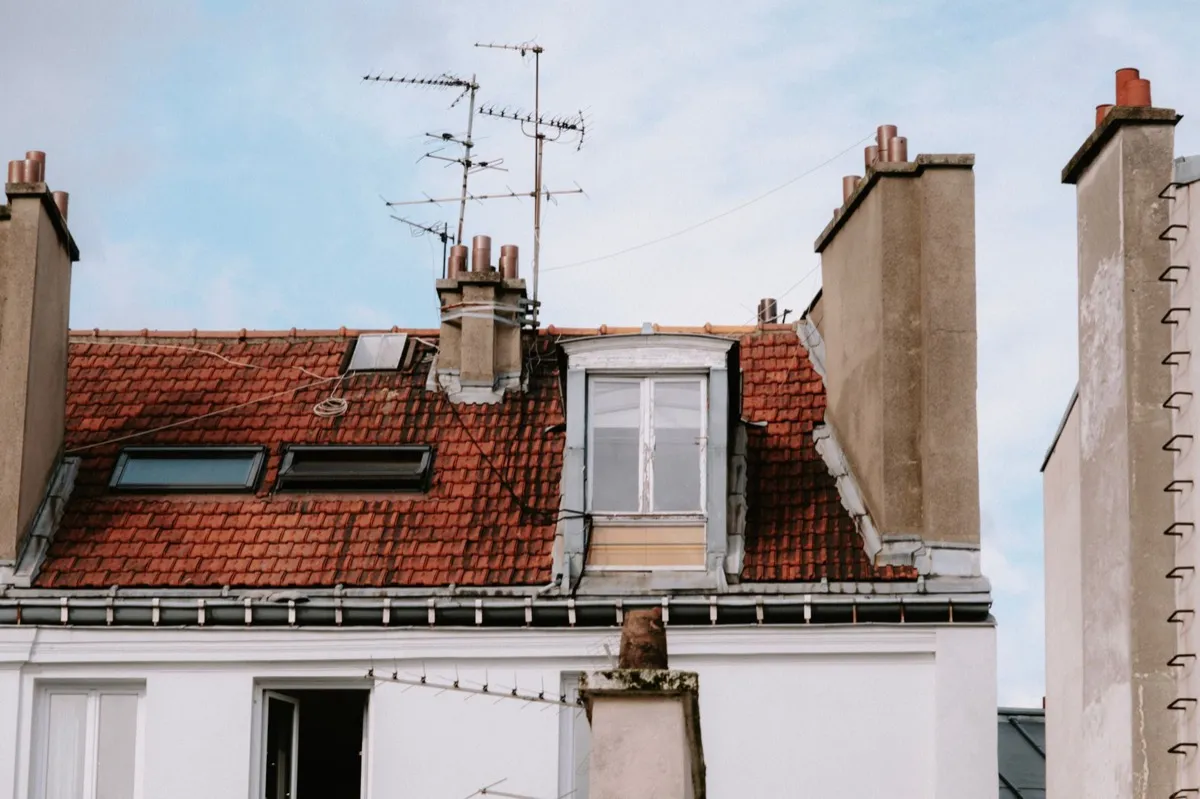
Chimney Flashing
Step flashing is a slope-dependent detail. Each piece works because the piece below it sits far enough down the roof to be out of the water.
Emergency Roof Tarping
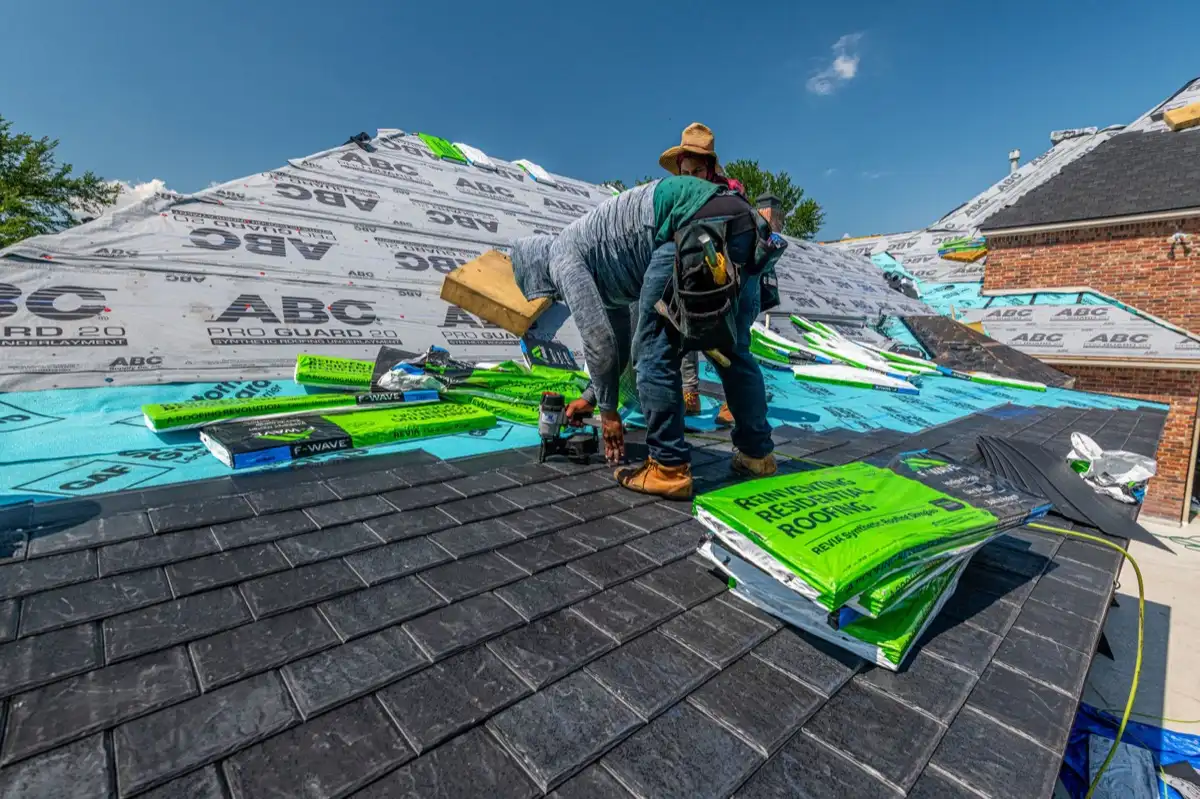
A tarp needs slope to work. On a plane under 2-in-12 a tarp becomes a shallow pool with grommets in it, and the water it holds finds the fastener holes you just made putting it up.

Commercial Roofing
The industrial belt on the west and south sides of this city is largely aerospace and light manufacturing put up between 1955 and 1985, which means acre-scale roofs designed at a quarter-inch per foot and originally surfaced in built-up asphalt with gravel. Those roofs are on their second or third covering now, and the real question is almost never repair against replacement.
Insurance Claim Support
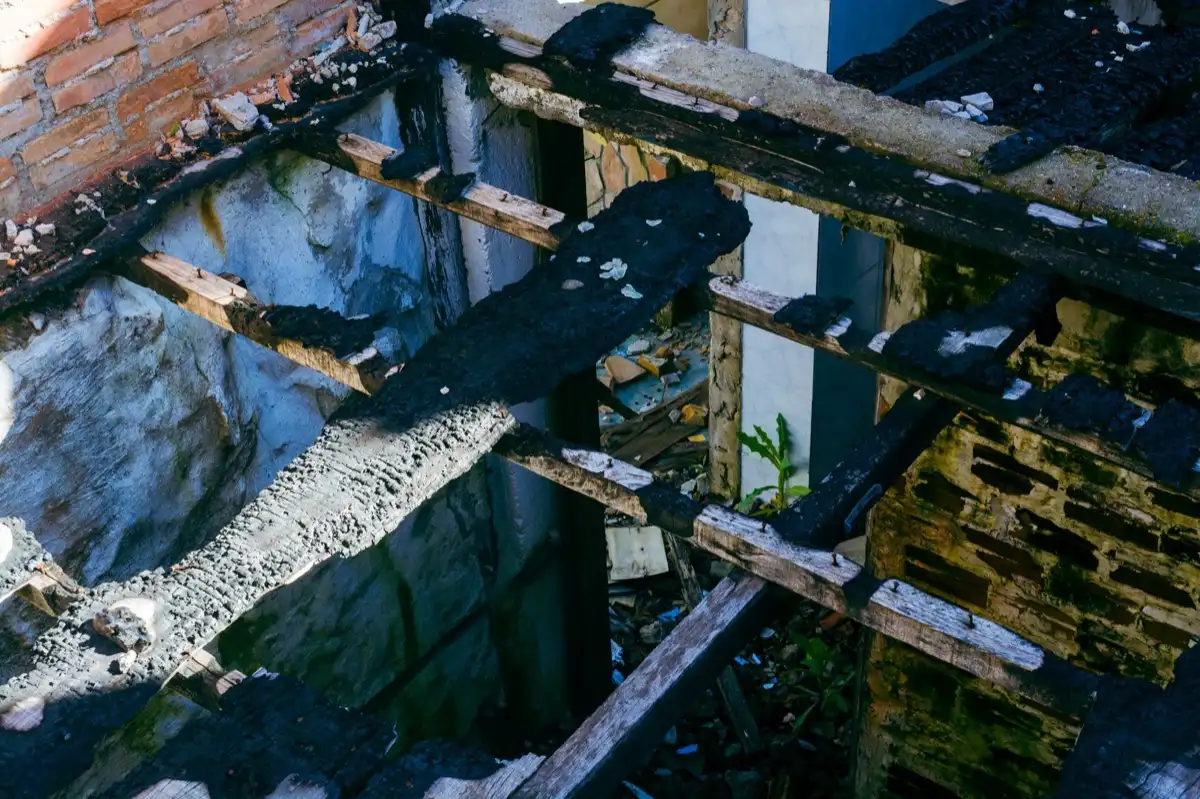
Most low-slope roof failures in this city are not insurable events, and knowing that before you file is worth more than any help we could give you afterward. Policies pay for sudden, accidental, datable damage.
Torrance Roof Pros is a licensed, insured roofing crew working Torrance and the wider South Bay on roof replacement, roof leak repair, low-slope membrane systems, standing seam metal, concrete and clay tile, and commercial re-covers. We install architectural asphalt shingles, 60-mil single-ply, two-ply modified bitumen and mechanically-seamed metal panels, and we rebuild the valleys, transitions and flashings where all of those systems actually fail.
What makes our estimates different is dull and useful: we measure the pitch of every plane before we price anything. Asphalt shingles need 4-in-12 to work under one layer of underlayment, and two layers between 2-in-12 and 4-in-12. A great deal of local housing sits inside or below that band, which is why the same roof can leak again after three separate repairs.
So you get a specification per plane rather than one material for the whole house, with an alternative priced beside it wherever a covering is being asked to do something it was never rated for. Residential and commercial work, a written workmanship warranty, photographs and moisture readings in every report, and a straight answer when a repair beats a replacement.
What Torrance Customers Say
Third roofer out for the same leak over our bedroom. First one to put a level on the deck. He showed me the plane read one-in-twelve, explained why shingles were never going to hold there, and priced a membrane. Two winters dry now.
They came out for what I was sure was a roof leak and found the shower pan upstairs. Charged me for the trip, gave me the name of a plumber, and did not try to sell me a roof. When I did need the garage done a year later I called them back.
Quote came with a sketch of the house and a pitch number written on every section, plus two prices where the addition needed something different. Nobody else did that. The re-decking was on the estimate up front instead of appearing halfway through.
We manage two light industrial buildings and they cut cores, photographed every one, and told us one roof could be re-covered and the other could not. Losing half the job by saying so is the reason we kept them on for maintenance.
Why Torrance Chooses Torrance Roof Pros
- ✓We measure slope with an inclinometer before quoting, so the covering matches the plane
- ✓One roof can get two or three specifications, priced plane by plane rather than averaged
- ✓Repairs are hose-tested in front of you before the crew leaves the site
- ✓Moisture readings and core cuts decide re-cover against tear-off, not a walk-around guess
- ✓We will tell you when a leak is plumbing, condensation or stucco rather than roofing
- ✓No claim we cannot support with dated photographs, test squares and slope readings
About Torrance Roof Pros in Torrance, CA
Torrance Roof Pros works Torrance and the surrounding South Bay cities on residential and commercial roofing: replacement, leak repair, low-slope membrane, standing seam metal, tile relays, gutters, ventilation and commercial re-covers. We are licensed, insured and bonded, and every roof we install carries a written workmanship warranty. We take single-family houses, small apartment buildings and light industrial roofs.
The way we work comes from what is actually on the ground here. This is post-war tract housing, framed shallow, with garages, porches and rear additions added at even lower pitches over the following decades. So we measure the slope of every plane before pricing anything, and we specify per plane instead of putting one material across a roof that needs two or three.
There are jobs you should not hire us for. If you want the cheapest number and the same covering put back on a plane that is below its rated slope, we are the wrong crew, because we will not warrant that work. If your leak turns out to be plumbing, condensation or stucco, we will charge for the visit and send you to the right trade instead. Both conversations happen before you pay a deposit.
How It Works
- 1
Pitch reading on every plane
We walk the roof with a digital inclinometer and write the measured slope for each plane on a sketch, alongside the covering currently on it and the minimum slope that covering is rated for. That sheet is where the whole estimate comes from.
- 2
Photographed condition report
Lifted tabs to check fastener placement, valley and transition metal, upstand heights at walls, then the attic for staining rings, rust halos and pin moisture readings. You get the photographs with a scale in frame and the numbers, not adjectives.
- 3
A price per plane, with options
Where a plane is under the minimum slope for the material on it, we price the correct covering next to a like-for-like repair so you can compare. Re-decking, valley metal and transition pans appear as line items rather than as later surprises.
- 4
Install, hose-test, warranty
Deck re-nailed to current spacing, self-adhered base over the shallow planes, welded or soldered transitions, then a hose test on every repair before we pack up. Site swept with a rolling magnet, and the workmanship warranty issued in writing.
Commercial Roofing in Torrance & Across the South Bay
The industrial belt through Torrance, Carson and Gardena is largely aerospace and light manufacturing built between 1955 and 1985, which means acre-scale roofs designed at a quarter-inch of fall per foot and originally surfaced in built-up asphalt with gravel.
Most are now on their second or third covering, so the question is rarely repair against replacement. It is whether the insulation under the surface is dry enough to re-cover legally and honestly. We answer that with core cuts on a grid, an infrared scan after sunset on the larger roofs, and a written remaining-life figure for each roof section, so property managers plan capital from measurements rather than from whichever building complained most recently.
- ✓60-mil and 80-mil mechanically attached single-ply, heat-welded and probe-tested
- ✓Two-ply SBS modified bitumen where foot traffic and equipment access are real
- ✓Core-cut surveys, one per rough 10,000 square feet plus every suspect area
- ✓Infrared moisture scans after sunset to map wet zones before cutting
- ✓Tapered polyiso to build a quarter-inch per foot where a plane holds water
- ✓Re-cover over one existing membrane where the survey proves the boards are dry
- ✓Phased sections and night work so tenants keep operating through the job
- ✓Twice-yearly maintenance walks with a photo log, drain clearing and seam probing
Service Areas
Torrance Roof Pros serves Torrance, CA and surrounding communities including:
Recent Projects Across the South Bay
Frequently Asked Questions
Do I need a permit to re-roof a house in Torrance?
Yes. A re-roof on a house in Torrance needs a building permit from the city, and the job is inspected. On a tear-off that normally means an inspection once the deck is exposed and re-nailed, and a final once the covering is on. We pull the permit, meet the inspector and hand you the signed card at the end.
Permitting also matters later: an unpermitted re-roof surfaces during escrow, and it is far cheaper to do it correctly now than to explain it to a buyer's agent in three years.
Why does my flat garage roof keep leaking after three repairs?
Almost always because the plane is below the slope its covering needs, so the repairs were sound work on a roof that cannot succeed. Shingles at 1-in-12 hold water on every lap, and each patch simply moves the entry point.
The fix is not another repair, it is changing that plane to something waterproof rather than water-shedding: a heat-welded single-ply membrane, a two-ply modified bitumen cap, or a mechanically-seamed metal panel rated to a quarter-inch per foot. We will measure the plane and show you the reading.
Can I put asphalt shingles on a low-slope patio addition?
It depends entirely on the measured slope. At 4-in-12 and above, yes, with one layer of underlayment. Between 2-in-12 and 4-in-12 it is allowed but requires two layers lapped 19 inches or a full self-adhered membrane, six-nail fastening and factory starter at eaves and rakes.
Below 2-in-12 no manufacturer warrants shingles and no code permits them, so we will decline that work and quote a membrane or metal instead. Plenty of patio additions in the South Bay read 1-in-12 and currently have shingles on them.
Does the state energy code affect a flat roof replacement here?
It can. California's energy code sets minimum reflectance and thermal emittance values for many low-slope roof replacements and alterations, which is why the white single-ply membranes are so common on additions and commercial buildings across the region.
We name the specific product on the proposal along with its rated values, so the inspector has what they need and you are not relying on a verbal assurance. Where a compliance path other than a reflective surface fits your building better, we will explain that option too.
Is hail damage common in the South Bay?
No, hail is uncommon on this part of the coast and small when it happens. What gets photographed and reported as hail here is usually granule loss from ultraviolet ageing, blistering from moisture inside the asphalt, or crushed tabs from foot traffic during an antenna or air-conditioning service call.
Real impact damage dents soft metal at the same time, so if your vent caps and gutter aprons are clean, the shingles were not struck. We will inspect, chalk test squares and document what we find either way.
How long does a re-roof take on a Torrance tract house?
A single-story house of 1,400 to 1,800 square feet with a straightforward hip roof is usually a two to three day job: tear-off and deck inspection on day one, dry-in and covering on day two, details and cleanup on day three.
Add a day for re-decking if the original plank sheathing has to come off, and add a day when a low-slope section needs a separate membrane system with its own transition pan. Rain in the forecast changes the sequence, never the dry-in.